

The Symbiotic Relationship Between Online Chromatographs and Analytical Shelter
 August
15, 2025
August
15, 2025
The Symbiotic Relationship Between Online Chromatographs and Analytical Shelter
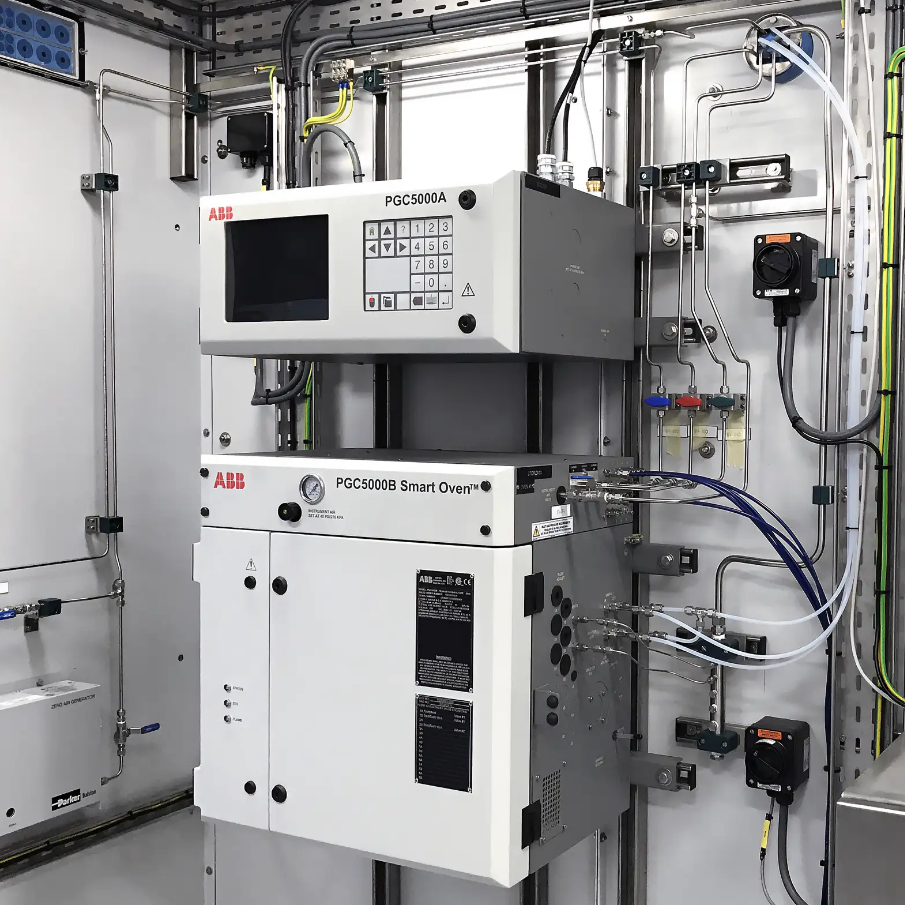
The foundation of modern chromatography traces back to 1903 when Russian botanist Mikhail Tsvet pioneered the technique while investigating plant pigments. Through systematic experiments separating components like chlorophyll and carotene, Tsvet established the fundamental principle of chromatographic separation based on differential adsorption—a breakthrough that would revolutionize analytical chemistry.
Key milestones in chromatographic technology development include:
√ 1921: Invention of the world's first thermal conductivity detector (TCD)
√ 1941: British chemist Archer Martin and engineer Richard Synge proposed partition chromatography theory, establishing the theoretical framework for gas chromatography
√ 1947: Development of the first laboratory chromatograph
√ 1954: Successful integration of TCD with gas chromatography systems
√ 1957: Breakthrough in capillary column technology
√ 1958: Introduction of the flame ionization detector (FID)
This technological progression bridged the gap between traditional laboratory analysis and modern online chromatography systems. Where conventional analysis rooms required manual sample handling and batch processing, online chromatographs enabled continuous, real-time monitoring—transforming industrial process control and environmental monitoring capabilities while maintaining the precision of laboratory-grade analysis.
The symbiotic relationship between online chromatographs and analysis rooms persists today, with laboratory instruments providing method development and validation, while their online counterparts deliver continuous process data—together forming a complete analytical ecosystem.
Since the 1960s, advancements in electronics have driven the evolution of online gas chromatographs, transforming them into compact, intelligent systems through continuous innovation.

These instruments quickly became indispensable in industrial process analysis. However, their operation depends on several critical support systems:
√ Stable power supply (typically backed by UPS for uninterrupted operation)
√ Carrier gases (hydrogen, nitrogen, or helium) and calibration gases
√ Temperature control (heating in winter, cooling in summer)
√ Sample pretreatment systems to ensure stable, pure, and impurity-free samples
This complex infrastructure gave rise to analytical hut integration—a specialized industry dedicated to creating optimized environments for online chromatographs.
The Analytical Hut: A Secure Home for Chromatographs
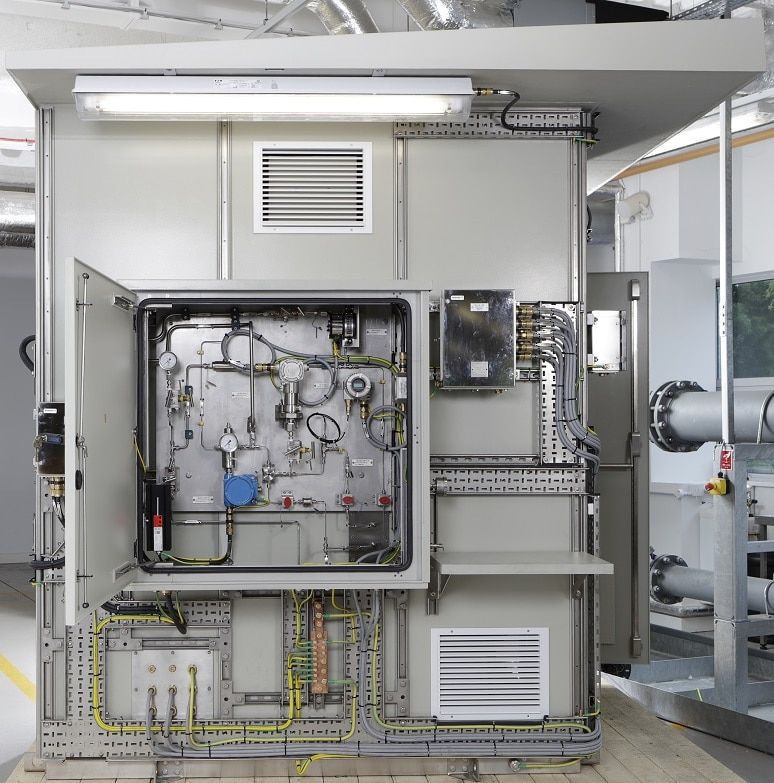
The analytical hut serves as the "home" for online chromatographs, with the instruments as its core. These facilities require meticulous system integration to ensure long-term, continuous operation in demanding industrial environments.
Critical Considerations for Safe Operation
1. Power Supply
While UPS systems prevent shutdowns during power outages, gas supply is equally vital. Without carrier gas, chromatographs cannot function.
2.Gas Safety & Management
Carrier gases (H₂, N₂, He) and calibration gases are classified as hazardous materials due to high-pressure storage.
Hydrogen, the most common carrier gas, demands strict leak prevention and professional handling.
Standard Gas Storage Solutions:
Small/medium analysis rooms: Gas cylinders are mounted on exterior walls, secured with brackets and chains to prevent tipping. Dedicated metal hoses connect them to pressure-reducing valves.
Large-scale plants: High-demand facilities use multi-cylinder hydrogen supply systems for centralized, efficient gas distribution and easier cylinder replacement.
The Human Factor: Maintenance & Management
Online chromatographs and analysis rooms are machines—without power, gas, and human oversight, they remain inert. Only through dedicated operation, maintenance, and management can they:
√ Perform automated, real-time analysis
√ Deliver reliable data to DCS for process control
Conclusion: An Interdependent System
The relationship between online chromatographs and analysis rooms is symbiotic—neither can function optimally without the other. Ultimately, their success hinges on human expertise, ensuring seamless operation and accurate analytical results for industrial processes.
Latest News
-
Optimize Hygienic Processing with the Micropilot FMR43 Non-Contact Radar Level Transmitter…
September
11, 2026
-
Hirschmann BRS20-8TX/2FX-SM-EEC BRS20-1000S2S2-TTCY99HHSESXX.X.XX 942170016
September
10, 2026
-
Hirschmann BRS20-4TX/2FX-EEC 942170013: A Compact Managed Switch for Industrial Ethernet…
September
07, 2026
-
When Industrial Networks Cannot Afford to Stop: Hirschmann BRS20-8TX-EEC in Stock…
September
04, 2026
-
Hirschmann BRS50-8TX/4SFP BRS50-00122Q2Q-STCY99HHSESXX.X.XX 942170010
September
02, 2026
-
Hirschmann BRS40-8TX/4SFP BRS40-0012OOOO-STCY99HHSESXX.X.XX 942170009 Managed Switch…
September
01, 2026
-
Hirschmann BRS40-8TX BRS40-00089999-STCY99HHSESXX.X.XX 942170008 All-Gigabit Managed Switch…
August
31, 2026
-
Why Industrial Networks Need More Than Ethernet: Introducing the Hirschmann BRS30-8TX/4SFP…
August
28, 2026
-
Hirschmann BRS20-8TX/2FX-SM 942170006 BRS20-1000S2S2-STCY99HHSESXX.X.XX Managed 10 Port Ethernet Switch…
August
27, 2026
-
SUPPLY-CHAIN PRESSURES PROMPT ABB SMART POWER PRICE REVISION FROM AUGUST 2026
August
26, 2026